2006/11/01

等老天降雨?不要推卸责任 Do something, don’t just pray for rainfall

Published in Merdekareview.com on 26 Oct 2006


十年前入学的孩子,记忆中已经累积一段天空蒙蒙胧胧的记忆。每逢西南季候风吹,蓝天突然被遮挡,空气中还偶而弥漫着刺鼻的焦味。印尼周边国家如马来西亚、新加坡、汶莱、泰国受烟霾困扰,一眨眼,竟已
10年。

不久前,在东南亚各国强烈要求下,印尼总统苏西洛宣布该国将在近期内,寻求国会通过认签《东协跨国界烟霾污染协定》。如果印尼最终认签这项协定当然是好事,但这桩“好事”有多好呢?印尼认签了协定,我们的海滩在明年这个时候还可以一片“碧海蓝天”吗?

翻回过去一个月,我国与印尼领袖针对烟霾的回应。印尼领袖说:“除非风向转变,否则我们也无能为力。”我国的领袖也祈求天降雨去烟霾。两国政府甚至互相指责对方的种植公司及伐木活动是烟霾的罪魁祸首,然后我国政府公布:“印尼拿不出名单,证明没有大马公司涉及”。看来看去,两个东南亚的老大哥,都没有把话说完。

听起来,烟霾好像变成了自然灾害,谁也不必负责,下雨过后自然会有新鲜空气。我不禁打了个冷颤,两个都是贪污贪出名堂的国家,人民这辈子也甭想知道谁在烧芭了。

让我们一起搞清楚:烧林的是哪一群人?火耕种植原是传统农民的种植方式,火耕在全世界许多人口散居、腹地辽阔的地方,是一种让土地有机会休息、积累肥料的“永续性”种植方式。传统农民或群体一般上求自给自足,因此,火耕范围很小,他们依赖森林资源,不至于把几千万公顷森林烧光,还将烟霾“输送”到邻国。

这种传统的“永续性”生产方式,却在印尼70年代土地改革中被破坏。一些原本散居的传统农民被聚集起来,让路给一些大规模种植及生产的投资者。

大规模种植业者主要是油棕业者,还有咖啡、可可。印尼政府曾经说过,扑火工作艰难,主要是很多林火热点位于沼泽林。沼泽林是稀有的生态区,一般上是保护区,为什么会变成种植区不在话下。然而,可以想像财力雄厚、并拥有政治势力的大规模种植公司,为了盈利不惜破坏环境。

如果说伐木业是目前全世界最赚钱的行业之一,为什么种植公司不选择伐木然后卖掉赚钱?印尼多年来的伐木活动已经毁掉许多原始热带雨林,这些公司近年来“趁风势”所烧的森林主要是没有经济价值的次生林,或是伐木后的“残余林”。另外,由于印尼政府征收橡胶树桐的砍伐及出口税,未有政策奖掖应用橡胶树桐的公司,所以,很多老橡胶林也因此“葬身火海”。

资料显示,1997年的霾害中,印尼政府提控至少167家涉及非法烧林活动的公司,然而,审讯过程繁锁冗长,到了2000年只有一家公司罪名成立被处罚。发展中国家法制不健全、执法不严的问题,往往让这些大财团有机可乘,通过剥削自然环境积累资本。对财团来说,在发展中国家“钱”可以解决的问题都不是问题。

认识印尼在遏止烧林活动的能力后,那我们要问,认签了《东协跨国界烟霾污染协定》能改变多少?目前,我们听到的是马、新、泰、汶已经放话:早一点签署,我们可以早一点启动拨款机制。

的确,协定中列明东南亚各国在监控、评估、预防及回应的合作方向,比如:交换资讯、技术、专才。而印尼在认签这项协定后,需在国内制订有助于解决烟害的政策及修改法令。但印尼最终是否会揪出非法烧林的公司,这还需取决于他们国内的政治意志。做为一份“指导性”协定,就算烟霾继续或恶化,根据协定中第27条文,各国也只能“通过友好地咨询及协商解决。”

许多针对环境问题设计的跨国性或国际性协定,纵使在认签国修正了国内的法令后,也因国内本身的司法、执法、教育、经济、民众参与度等问题,成了无爪的老虎。

至此,笔者不想制造一种“都是印尼政府、种植业、伐木业的错!”的印象,因为印尼人民本身也深受烟霾困扰。经济活动是一种人与人之间的互动,当非法烧芭活动进行时,我们是否在入口、消费着源自于印尼烧芭活动的商品?如:家具木材、食物油、化妆品等等,间接成了烧芭活动的帮凶?

就算“没有大马公司涉及烧芭活动”是一句真话,我们也有权利知道自己是否正在掏腰包购买“烧芭财团”的产品,政府必须公布:国内什么集团与“烧芭财团”有商业关系,让这些典当环境赚钱的利益集团,承担更多社会责任,为环境遭破坏付出更多补偿!

必须做的事真的太多了,如果只祈求老天爷降雨,恐怕老天爷也不会同情不动脑筋的人。假使印尼认签了《东协跨国界烟霾污染协定》, 虽然值得掌声鼓励,但那只是小小的一步。


Do something, don’t just pray for rainfall

Young Malaysians who entered school ten years ago all remember a period of time when the sky was often shrouded by haze during southwestern monsoons. Every time a southeast wind blew the blue sky disappeared, and occasionally saturated the air with a stench that irritated the nose. Countries neighbouring Indonesia, like Singapore, Burnei and Thailand have been disrupted by low visibility and choking haze for ten years.


Not long ago, Indonesia was urged by ASEAN countries to promptly ratify the ASEAN Transboundary Haze Agreement. Indonesian president Susilo Bambang Yudhoyono said earlier that Jakarta would ratify the treaty. It would be good news even though the Indonesian government is the last ASEAN country that finally ratified the treaty. However, will Indonesia's ratification make a difference? Are the mechanisms in the treaty effective enough to overcome the annual smog?


How did the Malaysian and Indonesian leaders respond to this issue recently? Both prayed to God for rainfall. They also condemned each other for allowing their logging and plantation companies to practice slash-and-burn as a cheap and illegal means of land-clearing. In the end, the Malaysian government claimed that "the Indonesian government was unable to provide us the list of company names; therefore, no Malaysian company is involved in burning the forest." Neither of them has provided us the whole story.


It seems like nobody is willing to admit responsibility for the haze pollution. It has become a type of natural disaster - I trembled at the very thought of it. We can never know who is burning the forest, causing health and environmental degradation.


Let us figure out, who is burning the forest. In traditional agriculture fire has been used as a tool to clear the lands. Slash-and-burn has been extensively used in many places by traditional farmers. Sustainability of fertile soil can be expected in such a relatively, small-scale operation. Traditional farmers often demand and ensure their self-reliance and self-sufficiency in such operations. They rely on the resources of the forest; it is unlikely of them to destroy the vast area of forest until the smoke and haze is “exported” to their neighbours hundreds of miles away.


Such a "sustainable" mean of land-use has changed since the land reform of Indonesia in 1970s. Traditional agriculture has given way to forest conversions for the expansion of agricultural lands, settlements and tree crop-based large-scale plantations.


Those large-scale plantation companies mainly grow oil palm, coffee and cocoa. The Indonesia government once mentioned that fire suppression is difficult and costly as most of the “hot spots” are located in peat-swamp areas. Peat-swamp areas are so rare that they are usually protected as ecological reserves. We should question how these reserves were converted into agricultural land. From here, we can see how those companies undermine the environment in order to make profits.

Logging is one of the most profitable industries, but why didn’t the plantation companies just cut down the timber and sell it off? In fact, tropical forests in Indonesia have been destroyed after many years of logging activities. Most of the burning areas are unproductive over-logged forests and jungle rubber. In addition, the Indonesian government imposes heavy export taxes on sawn rubber timber. There are no incentives to encourage these companies to process and utilize rubber woods; therefore, the rubber timber are always goes up in smoke.

Some research shows that, in 1997, at least 167 companies were prosecuted for illegal slash-and-burn activities. However, only one company was sentenced. The dysfunction of the legal system and its weak implementation in developing countries can be easily taken advantage of as opportunities for those financial groups to accumulate capital at the price of environmental degradation.

What will be done if the Indonesian government ratifies the ASEAN Agreement on Transboundary Haze Pollution? Recently, Malaysia, Singapore, Thailand and Brunei have urged Indonesia to promptly ratify the treaty, which would allow the group to work out and put a regional firefighting fund into operation.

There are various provisions in the agreement for each party to adhere to its obligations in terms of monitoring, assessment, prevention and response. If Indonesia ratifies the treaty, they will need to amend or formulate some policies to tackle the smog. Under Settlement of Disputes (Articles 27), the agreement states: “Any dispute between parties as to the interpretation or application of, or compliance with, this agreement or any protocol thereto, shall be settled amicably by consultation and negotiation.” As the agreement lacks an effective dispute settlement mechanism, the effectiveness of the measures to prevent and control activities that cause haze pollution still depends on the political will within the Indonesian government.

In fact, there are many international treaties which are designed to combat the environmental problems. However, after they were ratified by the relevant countries, domestic problems in legislation, implementation, education, economics and public participation, amongst others, has always undermined commitment to the agreement.

In the end, we should not only blame on the Indonesian government, plantation companies and logging companies. Indonesian people themselves are also suffering. Economics activities are interactions between human beings. When the forest is burning, are we not consuming the products made of the materials from the burning forests, and thus do we not become the accomplices of these illegal activities?

Even if we assume that “no Malaysian company is engaged in burning the forest”, we still have the right to know whether we are buying products from corporations which are involved in illegal burning. We should demand that these corporations fulfill their social obligations by paying compensation for degrading the environment and the health of their fellow Malaysians.

Even if the Indonesian government ratifies the treaty, it does not mean that the haze pollution problem will be solved next year. It will be just a small step.

#


2006/10/31

FTA + Protest+ Media = ?

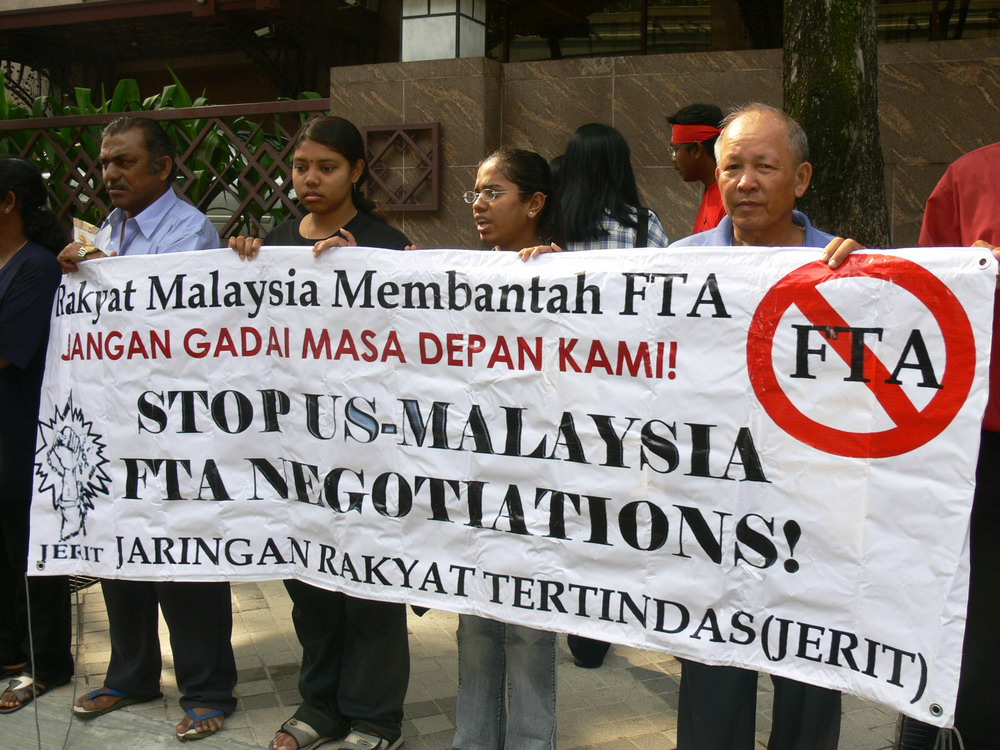
NOTHING about our protest against FTA is seen in the local newspapers.

The Oriental Daily described the protesters or Anti-free Trade Alliance as "EXTREMISTS"!

Should we send these editors abroad to see who are the real EXTREMISTS?

How far can our media go?

How far can the readers, the audience reach?

People never learn from the past.

That's why people always repeat the same mistakes.

2006/10/30

Do not trade our rights away


The Third-round of the US-Malaysia FTA talks was held this morning. I went to join a protest organized by the Anti-Free Trade Alliance in front of the Sheraton Imperial Hotel.

I studied quite a number of cases regarding free trade agreements between the US and the developing countries like Mexico, Latin Americans, African countries,etc. These agreements have jeopardized jobs and deprived poor people of cheap, generic drugs.

I think at this moment, most of the Malaysians still unable to figure out the disadvantages and the impacts of the FTA. Despite the potential threats of the free trade agreement, I was told that the coalition has been trying to demand a talk or a dialog with the delegations of the Malaysian government, however,their request has been rejected again and again.

What Malaysian should now concern is :there is no CONSULTANCY and TRANSPARENCY in the process of decision-making, thus , there is no ACCOUNTABILITY in the agreement.

The delegations or negotiators should disclose the details of the talks. Why all this secrecy? What are they trying to hide from the public?

The US Congress has to approve FTAs negotiated by its Trade Representative before they can come into effect - and involve Parliament in the decision to sign the FTA. Would our Parliament ask for a white paper? A public hearing? A parliamentary debate? Or (set up) a parliamentary select committee to discuss the agreement?

Unfortunately, Parliament has been silent on the matter. There has no public participation with stakeholders. Can we hope for an open and fair discussion?

They should stop the talks now and talk to the people.

Do not trade our land, water, air, education, health, democracy away.
Do not trade our rights away.

Do not wait until it is too late.

2006/10/20

Wild Life


My adventure in the UK has come to the end finally.
I came back to Malaysia a month ago.

One week after I arrived, I started my working life in our capital - Kuala Lumpur.

Currently, I am working for the Publicity Department in a political party.
I have not been updating my Blog since I came back.

Things will never be the same after you have left some people or some places for a long time.

Now I am living and working in a strange city, with a lot of strangers (who soon has become my friends). This is my new life.


There are full of things and people that can make oneself happy or unhappy, contented or dissatisfied, full of hopes, or the worst, making your dream scattered.

I never dare to have any high expectations on anything, however, it is still hard to deal with people or things that are disappointing.

I think, that's life.

That's life?

KC said to me:"no matter what you have chosen, the most important thing is, you think 'That's matter!' "

Should I continue to write on my blog?

2006/09/28

伦敦拼图 9月13日-18日, Amazing London


这是我今年第二次到伦敦。上一次逗留,是今年初前往MANCHESTER时,在伦敦转车的短短数小时。当时已经匆匆地游览过了白金汉宫、海德公园、TOWER BRIDGE、西敏寺国会大厦几个非常著名的景点,这一次到伦敦,我决定集中脚力在“逛博物馆”!

感谢平,让我在他的新居住了五个晚上,让我再次有机会享用大男生准备的食物。在伦敦这几天,到过的主要地方依序为:国家艺术画廊、大英博物馆、 大自然博物馆、Victoria and Albert博物馆、英国剧作家莎士比亚剧场(仿造建筑)、思想家马克思的墓地、BBC新闻中心、百年历史的黑人市场、FOREST HILL HORNIMON 博物馆。

在伦敦这几天,一个人看地图走走逛逛、迷路、搭地铁、巴士的感触很复杂。这份心情笔记整理起来也挺不容易。决定不去做过多的描绘,只告诉大家自己身处其中的感觉。

在国家艺术画廊内最失望,因为梵谷、莫纳及毕加索的画作都被移走了!不过,还好看到许多古典主义画派的作品,我凭着很多年前在暨大选修的“西方美术史”的一点点印象,来鉴赏墙上的画作,也算没有白走一趟,只是有点恨当时没把老师的讲义拿在手上!

大英博物馆好大好大,建筑物像是由圆润的石柱撑着,我在里面走了六小时,最激动的时刻就是看见了埃及木乃伊,起初我以为它们被搬到上海参展了,后来询问了柜台,才在另一个展厅找到它们。然而,在“中国展览厅”那里有点寂寞,因为曾经听说敦煌莫高窟、北京圆明圆内很多宝物都被盗来了当时的“大英帝国”,但在那儿,我只从一面墙上,看到一幅相信是从莫高窟搬回来的大壁画,我找不到有关它的说明,所以无法确定,不过,有九成像。这个博物馆的另一个好处就是,参观者可以在里面拍照。我知道照相机的镁光灯对古文物不好,但既然馆方不介意,那我当然不客气了。

与平、Steven共进晚餐时,我说:“这次看见木乃伊和在中国看见千年古尸的感觉一样,我因好奇而想看,但看了后又觉得它们不属于这个世界,而觉得心里不舒服。”然后不知怎的,平与Steven 就争论起到底大英博物馆做的是“替没有能力的人们进行文物保护工作” 还是“展示盗窃回来的古文物帝国主义”?我并不积极地参与他们的辩论,对我来说,盗来的,就是盗来的。不过, 像古埃及、古希腊神殿或宫殿的那些理石人像、石雕,重甸甸的,他们当年有本事运回英国,也算他们有本事了!

大自然博物馆与V& A博物馆只隔一条街。大自然博物馆内刚好有一项恐龙展,印象中,读初中时,我的父母曾经带我去吉隆坡参观过了。这两所博物馆的展出内容不提,单单是它的建筑物,就已经极有历史、美术价值。大大的拱形门、拱形窗、层层叠叠… … 那种属于帝国的气势,我也只在伦敦感受到。

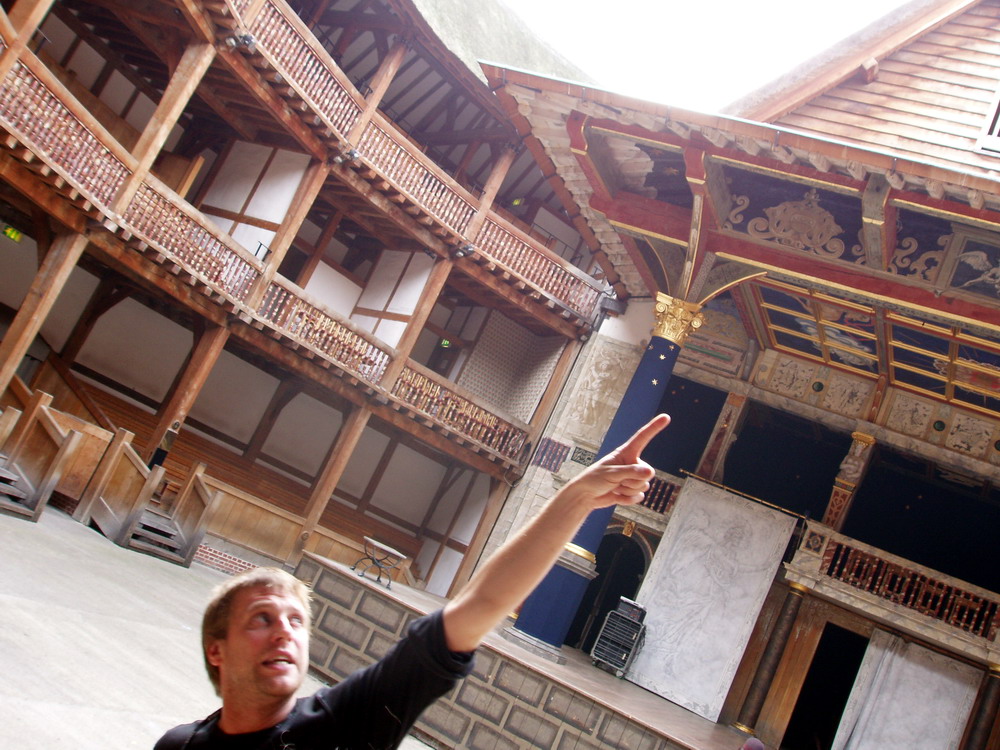
星期六一早,我参观了1992年才落成的莎士比亚剧场,对莎士比亚的作品存有的一点记忆,来自在中国求学时的初恋。那时,在暨大旁的小小电影院观赏过《哈姆雷特》,选修“外国文学史”时,也读了关于莎翁及其作品的事。以前看书时,还看到人们争论到底莎士比亚到底是不是真有其人?然而,据这个剧场的响导所言,莎士比亚真有其人,而且因戏剧成为伦敦的富人。他的剧场当年能容纳3千多人,在那个年代的英国,是皇室与国会的斗争时代,甚至非常有政治影响力。伟人的成就往往只限他那代人,这位戏剧大师和我接下来去“探访”的马克思一样,至今已经没有后代,然而,他们的作品、思想对现今人类社会依然发挥着影响力。

离开莎士比亚剧场之后,我无意间走到一个社区,那里有一条走道,筑起了一道长长的墙,记载了这个社区争取成为保护区的历史。我看到一句让人动容的话:“OUR OBJECTIVE IS TO PROMOTE HUMAN DIGNITY (我们的目标是推广人的尊严)”。

我与Steven在星期六下午,走了好长、好长的一段路,终于找到了HIGHGATE CEMETRY!没想到,墓园管理人竟向我们每人征收两镑入场券,好吧!看在伟人的份上!在中国求学的时候,我家的官员“不鼓励”马来西亚学生在中国选修关于马克思主义的科目,现在,如果他们知道在西方的学府,教授们能够名正言顺地向各国同学介绍马克思、社会主义,这些政治部人员肯定暴跳如雷!我想,天底下也只有害怕人民太聪明、而发现自己不断做错事的政府,才会去限制、阻止人民接受不同的思想。

我们没买一镑的墓园图,因此在墓园里找了好久,路上偶然发现一些华人的坟墓,Steven是英国出生的华人,他不断地问我一些以中文书写的墓碑上的中文字,待我解释了一轮后,他咋舌道:“好复杂!”马克思的坟墓在一个转角处,他与妻子、女儿、孙子同葬一穴,墓壁上一面刻着:“THE PHILOSOPHERS HAVE ONLY INTERPRETED THE WORLD IN VARIOUS WAY。THE POINT HOWEVER IS TO CHANGE IT (哲学家只是以不同的方式对这个世界进行诠释,然而,重点是要改变它。)”另三面是空白的。此刻,我带着复杂的心情向他致以万二敬意。墓前有两束鲜花,是由中国新疆生产建设兵团代表团献上的,我真的很想知道,这些从小接触马克思思想教育的中国人,生活在经济迅速发展的中国,站在马克思墓前,他们在想什么?

其实我也没想什么复杂的事。马克思墓的四周,也是许多民权运动者、革命人士的安息地。我想起吉隆坡的林连玉墓,华教人士深怕华裔子弟忘记他,在他的墓上刻着满满的介绍,我问Steven说:“马克思的坟墓怎么没有关于他的介绍?”他说:“不用写大家都知道的。”那,大马华人的林连玉呢?突然,我感到很悲哀。

这一个傍晚,我们走了很久,从OXFORD CIRCUS 走到STRAND,才找到平工作的BBC。走入这个许多新闻从业员梦寐以求的新闻殿堂,我不禁再次回想,新闻专业出身的我,究竟会在哪里落脚?

星期日的中午,我再次独自出发,这回,我选择了大象堡(Elephant and Castle)附近的一个市集。前往目的地的路上,很多小商店都是由黑人经营,原来,我来到了黑人区。市集很像马来西亚的Pasar Malam, 唯一不同的是,这里的摊主95%是黑人。与其中一位白人摊主聊天时,才知道这个市集已有100年以上的历史,高峰期时,整千人将马路挤得水泄不通,这里很多摊主已经第二代、第三代人。我觉得最有趣的是,光碟摊主们摆卖了各自国家生产的流行乐、电影,形成“一摊一国”的景象。打听之下,原来他们的租金一天24英镑。

这里的第二代、第三代黑人说的英语和英国人一模一样,够标准了吧?但我在巴士上、大街上还不是黑人一堆、白人一堆的多,我说啊,我们的政府,怎么能够认为华小、淡小的存在是国民无法团结的原因?

脚累了。行程也越来越松散了。一个人四处旅行曾经是我浪漫的个人主义梦想,然而,在英国这一年,我却无法如此洒脱。

我想,这回是我在英国第一次,不去想为什么,手指指着地图,想去哪里,就去哪里,独自在大街上闲逛。没人理会你身上有没有钱,没人理会你下一站到什么地方,这几天,这个样子,我已经很满足了。总算不太狼狈。

#

2006/09/27

小镇印象二:朴茨茅斯 (9月10日-13日)Impression of Portsmouth


我到朴茨茅斯之前,心里有一幅画面来自JANE AUSTEN 的 Mansfield Park中女主角FANNY的老家。临河而建的民房,勾勒出英国18世纪平民生活的景像。电影中,FANNY和她的父母、八个兄弟姐妹挤在小小的双层房子。


火车驶进PORTSMOUTH时,我的第一印象是:“好可爱啊!”

先说吃的,在朴茨茅斯这几天,明特地为我准备了许多食物,有回锅肉、糖醋排骨、排骨粟米汤、药材汤、鱼(这是我在英国一年来第一次看见有头有尾巴的整条鱼!)

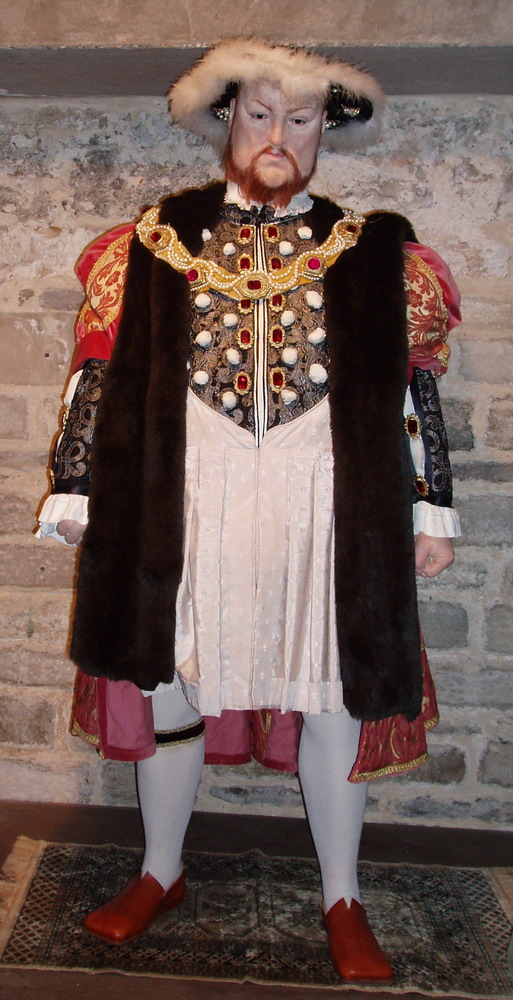
隔天中午,我们俩参观了由亨利八世(Henry VIII)在1545年所修建的SOUTHSEA CASTLE,这座城堡有厚厚的城墙以抵御外敌,城墙内还有炮弹、历史走廊,当天晚上,我们徒步到老朴茨茅斯,那里的海景也是被一堵城墙遮挡住了。穿越城墙,两艘大客轮在我面前驶过,客轮的灯火让我看清它展现在漆黑海面的轮廓,我再次想像TITANIC远征大西洋的孤独身影,远古的悲剧,想来心里还是戚戚然。

OLD PORTSMOUTH 的尽头是海堤,对岸是新式渡轮港上的一座SPINNAKER TOWER,横看像一支火箭,侧看像一条鱼,夜晚发出蓝色的光芒,如此怪诞的建筑物在对照彼岸的古老城镇,到底规划师要表达什么东西?这让我感到非常郁闷。

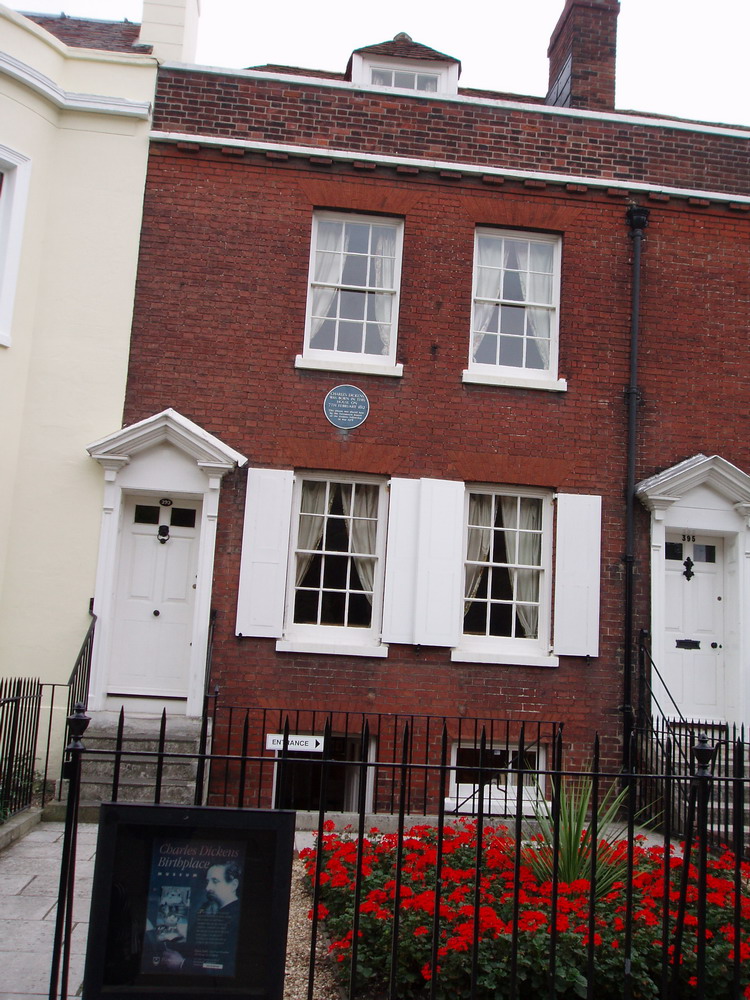
第三天,我们步行走到了另一个英国文学家CHARLES DICKENS的出生地。虽然只记得中学时代读过他的David Copperfield, 却也不太记得故事内容,但我向来对名人的故居都很有兴趣,DICKENS 出生在三层楼加一层甲楼的排屋。房屋的大小和马来西亚的豪华三层排屋应该差不多。当我看到屋里橱柜、桌椅的家居摆设时,我惊讶地告诉明:“我到过英国人的家里,他们的家庭还是如此摆设,没想到他们几百年来生活的场景还是一样”,她说:“英国人是很念旧的,很少看到英国人家里有特别新颖款式的家具。”我回想几年前在中国,参观过的博物馆、故居的旧中国家居,在中国的城市地区几乎已经找不到那种古旧的风情了。

据说DICKENS死在屋里的长凳上,但较有争议的一点是:究竟如官方所说,他在家里进餐时中风的?还是坊间所传说,在红颜知己Nelly的家里中风后,由马车载送回家,然后死在那张长凳上?虽然有证据显示为后者,但女主角由始至终都没有承认(据说是为了保护DICKENS的名声),而此故居开放给公众以来,Nelly 都没有访问过这里。若真爱过,为其躲在暗处也是一种牺牲吧?

过后,我们往朴茨茅斯的另一端过去。是昨晚的彼岸。海堤区名为COMMON HARD,海上停泊着一艘造于1860年的战舰HMS Warrior,是当年最大、速度最快、设备最齐全的。与古战舰平行的便是SPINNAKER TOWER,高塔下是人来人往的渡轮港口兼商业中心。

走进了NIKE专卖店,我非常不明白,一双NIKE在英国最低价能以25英镑买到( 以英国的最低工资5.05镑计算,一名在超市打工的年轻人做一天工就能拥有了),但在我成长的社会,却能成为年青人所趋之若鹜的高级流行商品。

一路上,明好几次对我说,英国很多老房子的外墙都被一些攀沿植物覆盖着,常令她觉得阴森恐怖起疙瘩,我却觉得让四季的不同色彩在墙上更替,是一件非常可爱、浪漫的事,再说,在森林面积迅速消失的今天,能被花草树丛包围着,不也是一种幸福吗?

#

小镇印象一:南安普顿 (9月9日-10日) In Southampton


星期六早上,我乘搭廉价巴士(预先在网上购买的1镑巴士票)到Southampton找珊,明也同时在那里等我。

Southampton 中文称南安普顿,我错把17点45分当成4点45分,提供了错误讯息,结果害两位朋友在车站干等了一个小时,真的不好意思,不过,还好她们一见如故。

到珊家吃了一顿丰富的晚餐。结果大家都累得一早便呼呼大睡。隔天,在参观完小小的南安普顿大学之后,她们陪我到当地一家医院探望恰巧入院的前室友。一进入南安普顿医院,还以为自己进入了购物中心!医院里有WHSMITH书局,还有BURGER KING!也不知道我的朋友究竟感染了什么病毒,导致她的三节背脊骨出现裂缝,需要动手术。老同学每回见面,便不知道下一次见面会在什么时候。每次分手,总是依依不舍,希望她手术后会没事。

南安普顿给我的感觉像个新镇,不像Norwich 那么多经历几百年风雨的建筑物。听说附近的一个港口是TITANIC启航的地方。倒是海边还保留了中世经城堡的一点点遗迹,在HOUSE TOWER小小博物馆内,我们穿起了罗马公主、中世纪骑士及都铎女皇的服饰。看着彼此的装扮,大家都笑弯了腰!

我们错过了海事博物馆的开放时间,失望地沿着城堡的遗迹,看见了许多老老的建筑物,突然我在一面墙上发现“JANE AUSTEN”,这位英国文学家原来曾经在这里住过!在写论文期间,我受室友的影响,观赏了多部改编自古典小说的电影,迷上了JANE AUSTEN,她的Sense and Sensibility, Mansfield Park,Pride and Prejudice 都是经典。

走着,走着,我们来到在一座拥有千年历史的教堂。它的对面,是都铎式建筑物,黑白对比外墙是它的最大特色,每次看见这类建筑物,我总是不禁陷入遐想。

离开古城区,我们回到了现代化的市中心,商业中心的品牌好像到哪里都一样,又是“全球化”… …

2006/09/08

准备启程 Ready to Set Off

医院最后一天上班的情形简直无法想像,原本四个人负责的厨房,调走食物经理后已经忙得不可开交,偏偏在我的最后一天,只安排了我和另一个新同事,深深地感觉到自己是如何地被“物尽其用”。

明天,我将到英国的南安普顿和朴茨茅斯两个小镇分别逗留的两天及三天。过后,我将在伦敦逗留了五天。这也是我在英国期间,第一次独身上路,当然是在朋友的收留下,离天NORWICH 超过一个星期。告别Norwich, 期待新知识、新体验!

I had a terrible last day working at the hospital, they only arranged two hosts for our kitchen! They used to have four assistants working in one kitchen. After restruturing, they took off the post of Chef Manager, therefore the rest of the kitchen hosts have become busier than before.

Forget about those unhappy things in the hospital. Tomorrow, I am going to visit my friends who live in Southampton, Portsmouth and London respectively. I shall leave my blog for at least two weeks. After saying goodbye to Norwich, I hoped for a fruitful trip, filled with friendship and new insights in the UK.

#